When Kids are Obsessed with Skin Care Products | News
The issue is not so much the products, but the ingredients in some of them, says Dr. Suozzi. She mentions that many of the youngsters she has surveyed either don’t know or can’t name ingredients in the products they use or are considering.
“This is really important, because there are a lot of things that are frequently used in products for mature skin that kids not only don’t need, but that can be harmful for them,” says Dr. Suozzi. “In terms of durable changes in the skin, it’s more of a local irritant problem that we’re seeing, or a temporary disruption in the skin barrier. But prolonged use of certain skin care products could predispose a person to facial eczema or a longer-lasting inflammatory condition,” she says.
Dr. Suozzi highlights some ingredients commonly found in adult formulas that can cause irritation or allergic reactions in children, including:
- Fragrance and perfumes, which are a common cause of allergic contact dermatitis and skin irritation.
- Alcohols, which strip the natural skin barrier, the protective layer on the outermost surface of the skin, and cause dryness. Examples include denatured alcohol, isopropyl alcohol, and ethanol.
- Harsh acids or chemical peels, which cause redness and peeling to thin, sensitive skin. Avoid glycolic acid, salicylic acid, and strong AHAs/BHAs.
- Retinoids and retinol, which can cause skin irritation. Both are used to treat acne, but are not appropriate for pediatric use without a prescription.
- Chemical sunscreens, which include filters such as oxybenzone or octinoxate that can be irritating for kids. There is also concern that they could cause hormonal disruption in children. Mineral sunscreens containing zinc oxide or titanium dioxide are safer.
- Parabens and formaldehyde-releasing preservatives, which can cause irritation. Avoid methylparaben, DMDM hydantoin, and quaternium-15.
- Pore-clogging or comedogenic oils, which can worsen acne. Avoid coconut oil, cocoa butter, and lanolin.
Note that even essential oils, which many people believe are safe because they are natural, can pose risks, says Dr. Suozzi. Essential oils can trigger allergic reactions or phototoxicity, characterized by a sensitivity to sunlight. Examples include citrus, tea tree, peppermint, and lavender. Likewise, some natural physical exfoliants and scrubs can cause microtears and inflammation in the skin. Avoid apricot kernel or walnut shell scrubs. Dr. Suozzi recommends limiting child and adolescent skin care routines to no more than three products at a time.
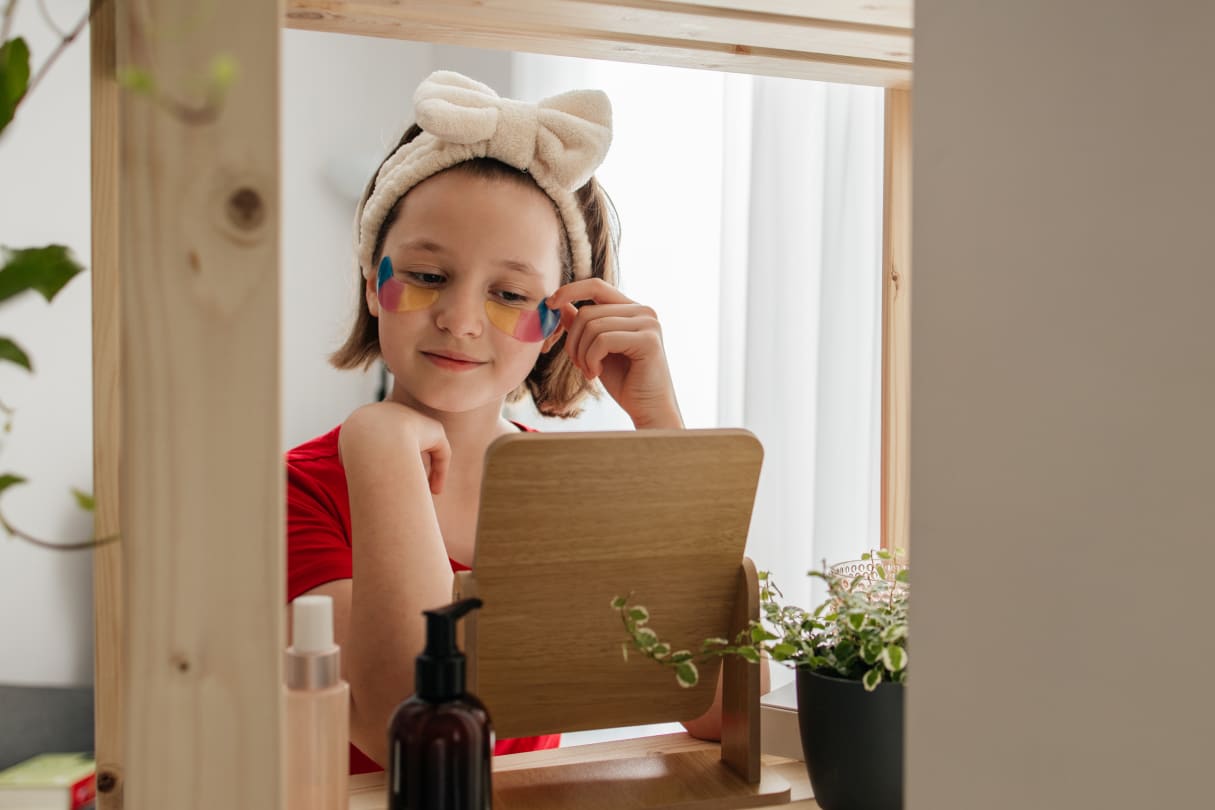
Occasional sheet masks for fun are fine, she adds—just not for daily use. “Sheet face masks tend to have a lot of ingredients in them,” she says. “But they can be fun. If kids are doing this once a month with friends, it’s probably not harmful. The things that are most likely to irritate your skin are the ones you’re applying more frequently.”
link