10-Plus Skin Supplements to Age Gracefully
When building a natural skin care routine, most of us tend to focus on moisturizers, creams, serums and toners. While these are definitely important, the true secret to skin health goes beyond the surface. In fact, getting a good variety of vitamins for skin, either through the diet or through supplementation, is just as crucial as what you’re stocking up on in your cosmetics cabinet.
So what vitamins are good for skin, and what vitamins are good for dry skin or other specific skin concerns, like acne, aging or redness? Here’s what you need to know.
Role of vitamins in skin health
Vitamins are absolutely crucial to maintaining overall health and wellness, and in recent years, more and more research has demonstrated that vitamins play an integral role in the health of your skin. Other compounds have also been shown to have skin-boosting properties and have been linked to everything from improvements in skin elasticity to reductions in cellulite and stretch marks.
So what are vitamins? Vitamins are a group of organic compounds that are necessary for growth and development as well as several other aspects of health, including skin health.
Certain vitamins are involved in cellular regeneration, collagen production, protection against sun spots and other factors that are essential to maintaining healthy skin.
Ad

When paired with a nutritious diet and healthy lifestyle, taking certain vitamin supplements can bring your skin care routine to the next level to help keep your skin healthy and glowing. Read on to learn about the best supplements and vitamins for skin.
Best supplements and vitamins for skin
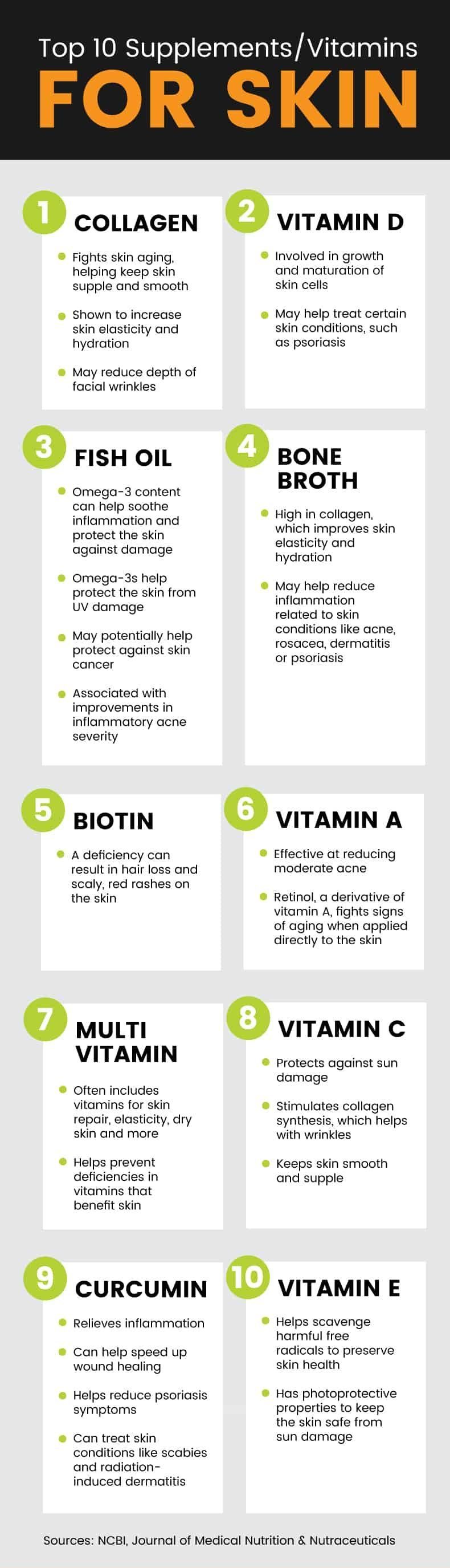
1. Collagen
As the most abundant protein in the body, collagen plays a central role in skin health. As we get older, collagen stores start to decline, resulting in symptoms like wrinkles and sagging skin.
Collagen is one of the best supplements for skin anti-aging, helping keep skin supple and smooth. In fact, one study out of Germany even found that supplementing with collagen peptides helped increase skin elasticity and hydration over just eight weeks.
Further research reported that collagen was also able to reduce the depth of facial wrinkles in post-menopausal women.
2. Vitamin D
Vitamin D plays an integral role in many aspects of health, and skin health is no exception. Emerging research shows that vitamin D may even provide benefits in the treatment of certain skin conditions, such as psoriasis, thanks to its involvement in the growth and maturation of skin cells.
Unfortunately, the majority of us are lacking in this key vitamin, with some studies reporting that an estimated 41 percent of the U.S. population has a vitamin D deficiency.
As one of the top vitamins for glowing skin, immune function, bone health and more, this is why it’s especially important to consider supplementation if you’re not getting regular sun exposure or filling up on vitamin D foods like salmon, cod liver oil or tuna.
3. Fish oil/omega-3s
Fish oil is a great source of omega-3 fatty acids, which are a type of heart-healthy fat with powerful anti-inflammatory properties. Fish oil tops the charts as one of the best supplements for glowing skin because of its omega-3 content, which can help soothe inflammation and protect the skin against damage.
According to one review published by the Dermatology Sciences Department at the University of Manchester, omega-3 fatty acids could help protect the skin from ultraviolet damage, helping maintain healthy skin and potentially protecting against skin cancer. Another study out of California showed that taking fish oil was associated with improvements in inflammatory acne severity, suggesting that fish oil could be a beneficial supplement for skin acne and breakouts.
4. Bone broth
Without question, bone broth is one of the best supplements for skin elasticity. Produced by simmering the bones, marrow, tendons and ligaments over a period of several days, bone broth is rich in trace minerals as well as health-promoting compounds like proline, glycine and glutamine.
Plus, it’s also high in collagen, an important protein that’s been shown to improve skin elasticity and hydration while also fighting wrinkles. Not only that, but it’s also been linked to enhanced immunity, which may help reduce inflammation related to skin conditions like acne, rosacea, dermatitis or psoriasis.
5. Biotin
Biotin is a water-soluble B vitamin that is often marketed as one of the top hair, skin and nails vitamins available. Although rare, a deficiency in this important vitamin can result in hair loss and scaly, red rashes on the skin, which is why it’s well-deserving of its status as one of the most important vitamins for skin and hair health.
Although research is still limited on the effectiveness of this vitamin in its use as one of the main supplements for radiant skin and healthy hair, it’s clear that a deficiency can be detrimental to your skin. One clinical study published in the International Journal of Dermatology found that adding 10 milligrams per day of biotin to acne treatment helped maintain skin hydration compared with those who didn’t take biotin, suggesting biotin may support the skin’s moisture retention during treatment-related dryness.
Be sure to include plenty of biotin-rich foods in your diet, or opt for a multivitamin or supplement to help fill in the gaps.
6. Vitamin A
Vitamin A is one of the first lines of defense against skin issues like acne and aging. In fact, one study published in the journal Medical Archives showed that taking a low dose of vitamin A tablets was effective in reducing moderate acne over a period of three months.
Ad
A multitude of other studies have shown that retinol, a derivative of vitamin A, can be effective at fighting signs of aging when applied directly to the skin.
Keep in mind, though, that topical vitamin A cream in the form of retinoids is typically recommended over oral supplementation, as consuming high amounts of vitamin A can lead to toxicity and increase the risk of serious side effects like birth defects and bone loss. Stick to vitamin A through food sources, or keep supplementation within the recommended daily allowance to avoid adverse side effects.
As always, be sure to consult with your dermatologist if you have any questions or concerns.
7. Multivitamin
Multivitamins can be a useful tool to help round out your diet and supply a range of important micronutrients, including vitamins for skin repair, vitamins for skin elasticity, vitamins for dry skin and more. Most multivitamins contain a good mix of vitamins, minerals and other health-promoting compounds that can help prevent nutritional deficiencies and ensure you’re meeting your needs.
So do multivitamins work? Although not everyone may need multivitamins, they can be beneficial for people with restrictive diets or those with increased nutritional needs.
Vegans and vegetarians, those with decreased food intake, and people who have recently undergone weight loss surgery may benefit from taking a multivitamin to help increase their intake of key vitamins for healthy skin while also supporting overall health.
In fact, a randomized, controlled trial published in the Journal of Cosmetic Dermatology relayed that a daily multicomponent nutritional supplement containing vitamins, minerals and other nutrients taken for 24 weeks led to measurable improvements in several skin-aging parameters, such as fine lines, firmness and overall skin appearance, compared with a placebo in healthy middle-aged adults.
8. Vitamin C
Vitamin C is well-known for its antioxidant properties and its ability to fight free radicals to prevent cell damage and oxidative stress to the body. Not only that, but as one of the top skin vitamins, it can also help protect against sun damage and stimulate the synthesis of collagen to aid in wrinkle repair and keep skin smooth and supple.
As always, getting your vitamin C through food sources like citrus fruits and veggies is always the best option, but you can also opt for vitamin C supplements or use a serum or cream containing vitamin C for face and body.
9. Curcumin
Curcumin is a potent chemical and plant pigment that is produced by certain plants, including turmeric. Curcumin supplies turmeric with its signature yellow hue and is also credited with the wide array of turmeric benefits that this plant has to offer.
In terms of skin health, the effects of curcumin have been well-documented. In addition to relieving inflammation, human studies and animal models also show that curcumin can help speed up wound healing, reduce psoriasis symptoms, and even treat other skin conditions, like scabies and radiation-induced dermatitis.
10. Vitamin E
Vitamin E boasts an extensive history as an important vitamin for skin and has been widely used in dermatology for more than 50 years. As a staple ingredient in cosmetics and skin care products alike, research shows that vitamin E helps scavenge harmful free radicals to preserve skin health and also has photoprotective properties to keep the skin safe from sun damage.
Plus, aside from promoting skin health, some studies suggest that vitamin E and vitamin E oil may be some of the most effective hair vitamins available as well. One study showed that supplementing with vitamin E increased the number of hairs in volunteers with hair loss by 34.5 percent over an eight-month period, cementing its status as one of the top vitamins for hair growth.
These aren’t the only supplements and vitamins for skin health either. The following skin supplements and vitamins for skin have also been shown in studies to benefit skin health:
Worst supplements for skin
Although there are a wide range of available supplements and vitamins for skin acne, not all are good options, and some can even be downright harmful for your skin.
Choosing a supplement that’s free of fillers and additives is essential, not only to make sure you’re getting the best possible quality, but also to avoid consuming unnecessary and dangerous added ingredients that could potentially come with a long list of side effects.
Additionally, more is not always better when it comes to supplements, and sticking to the recommended dosage is key if you’re looking to maximize your results. Biotin, for example, is one of the top vitamins for skin health, and a deficiency can cause symptoms like hair loss and scaly skin. However, taking too much of even the best biotin supplement can actually worsen acne and trigger skin problems.
Finally, certain types of vitamins are better applied topically or consumed through food sources rather than supplements. Vitamins A, C and E, for example, are some of the best antioxidant supplements for skin but are often recommended in the form of skin serums and creams rather than in capsules or pills.
High doses of certain fat-soluble vitamins can also build up and potentially lead to toxicity if consumed in high amounts.
Signs of vitamin deficiencies in skin
Changes in your hair, skin and nails often offer some of the first clues that you may be lacking a certain vitamin or mineral in your diet. While deficiency symptoms can vary widely based on which micronutrients you may be low in, some of the most common symptoms of a nutritional deficiency can include:
- Pale skin
- Hair loss
- Dry skin
- Acne
- Delayed wound healing
- Nail ridges
- Bruising
- Splitting or coarse hair
- Yellowing of the skin (jaundice)
- Dandruff
If you notice any of these deficiency symptoms, it may be time to look at your diet and determine what nutrients may be lacking. You can also opt for a multivitamin, which is an easy and convenient way to fit in the essential vitamins and minerals that your body needs to help round out your diet.
How to get the best vitamins for skin into your diet
Following a well-balanced diet rich in nutrient-dense foods like fruits, vegetables, healthy fats and protein foods can provide all of the vitamins for skin and hair that your body needs and can be even more effective than even the best supplements.
Try squeezing in a serving or two of fruits and veggies into each meal or swapping out your favorite salty snacks for a few nutrient-packed superfoods instead. To cram in even more vitamins for clear skin into your diet, start your morning with a power-packed smoothie, and fill it with your choice of greens and berries, plus a scoop of collagen or bone broth to bump up the benefits a bit.
If you’re having difficulty meeting your daily needs for certain vitamins or minerals or if you follow a restrictive diet that makes it hard to get what you need, supplementation can be another good option. However, it’s important to remember that supplements can be used to complement a healthy diet, but the majority of your micronutrient intake should still come from nutritious food sources.
What to look for in supplements for skin
Unfortunately, not all supplements are created equal, and many are often pumped full of fillers, additives and preservatives, which are added by the supplement industry in favor of profit rather than health.
The best vitamin brands should be free of added fillers and extra ingredients, plus tailored to your specific needs based on your age and/or gender, as the requirements for vitamins for men and vitamins for women can differ. Other supplements should also be purchased from a reputable retailer and contain minimal added ingredients to ensure you’re getting the best possible quality.
It’s important to stick to the recommended dosage listed on the instructions of your supplement carefully. Certain supplements for skin can actually come with negative side effects if used in high amounts, so use as directed, and be sure to consult with your doctor if you have any questions or concerns.
History
Believe it or not, scientists have only recently begun to understand the integral role that vitamins play in overall health, and the powerful influence that they have on skin health has just started to come to light within the last century.
The discovery of vitamins can be traced back to Polish biochemist Casimir Funk, who isolated a specific compound (later identified as niacin) that was found in brown rice and was able to prevent B vitamin deficiency symptoms. Coining the phrase “vitamines,” Funk proposed that there may be other vitamins that could help prevent other deficiency symptoms, like rickets, scurvy and pellagra. This soon led to the discovery of other vitamins essential to skin health, including vitamin E in 1922 and vitamins A and C in 1912.
Researchers started wondering what vitamins are good for your skin and began conducting experiments to understand the complex role between nutrition and skin health. In 1943, the first study using retinoic acid, a derivative of vitamin A, to treat acne was published, and just a decade later, it had become a widely used tool to help treat breakouts.
Studies have continued to emerge in recent years in an effort to understand exactly how certain vitamins, minerals and supplements can affect different aspects of skin health, including hydration, aging, acne and the treatment of specific skin conditions.
Risks and side effects
To achieve maximum results, supplements should always be paired with a healthy, well-rounded diet filled with nutrient-dense foods. While supplements can help fill in the gaps and bring an extra dose of health benefits, they can’t make up for the wealth of nutrients and health-promoting compounds supplied by a balanced and healthy diet.
If you have any underlying health conditions, check with your doctor before starting supplementation, as some supplements may not be safe for certain health conditions and could also potentially interfere with medications.
Finally, be sure to start with a low dose and slowly work your way up to assess your tolerance, but never go above the recommended dosage listed on your supplement. If you experience any adverse side effects, consider decreasing your dosage and discuss with your doctor to address any concerns.
Frequently asked questions
What are the best vitamins for skin health?
Some of the best vitamins for skin health include vitamins A, C, D and E, along with B vitamins like biotin and niacin. These nutrients support collagen production, protect against oxidative stress, promote skin renewal and help maintain a strong skin barrier. Many skin supplements combine these vitamins to support overall skin appearance and function.
Do skin supplements actually work?
Skin supplements can support skin health when used consistently and alongside a balanced diet. Vitamins and minerals help nourish the skin from the inside out by supporting processes like collagen formation, hydration and cellular repair. Results vary based on diet, lifestyle, age and the quality of the supplement.
What vitamins help improve skin elasticity and firmness?
Vitamin C is one of the most important vitamins for skin elasticity because it supports collagen synthesis. Vitamin A helps regulate skin cell turnover, while vitamin E protects collagen from oxidative damage. These vitamins are commonly found in skin supplements designed to support firm, youthful-looking skin.
Can skin supplements help with acne or breakouts?
Certain vitamins and minerals may help support clearer skin. Vitamin A helps regulate oil production, zinc supports immune and inflammatory balance, and B vitamins can support overall skin metabolism. Skin supplements may be helpful for acne when combined with proper skin care, diet and lifestyle habits.
Are vitamins for skin better taken orally or applied topically?
Both oral and topical forms play important roles. Topical products deliver nutrients directly to the skin’s surface, while oral skin supplements help nourish the skin from within. Many people see the best results when they combine high-quality vitamins for skin with a consistent topical skin care routine.
How long does it take to see results from skin supplements?
Most people begin noticing changes in skin texture, hydration or brightness within four to eight weeks of consistent use. Improvements in firmness or fine lines may take longer, as collagen production and skin renewal occur gradually over time.
Are collagen supplements considered skin supplements?
Yes, collagen supplements are commonly categorized as skin supplements. Collagen provides amino acids that support skin structure, elasticity and hydration. Many formulas also include vitamin C or zinc to enhance collagen synthesis and absorption.
Can vitamins for skin help with dry or aging skin?
Supplements and vitamins for skin such as vitamin E, vitamin D and omega-3 fatty acids support moisture balance and skin barrier function. Antioxidants like vitamins C and A help protect aging skin from environmental stress and support a smoother, more youthful appearance.
Is it safe to take multiple skin supplements together?
Taking multiple skin supplements can be safe, but it’s important to avoid excessive doses of fat-soluble vitamins like A and E. Choosing a well-formulated supplement or consulting a healthcare professional can help ensure balanced nutrient intake without overdoing it.
Who should consider taking skin supplements?
Skin supplements may benefit people experiencing dryness, dullness, uneven tone, signs of aging or increased stress on the skin from environmental factors. They can also be helpful for individuals whose diets may lack key vitamins for skin health.
Final thoughts
- Vitamins play an integral role in many aspects of skin health, and adding a supplement into your routine could help keep your skin glowing and smooth.
- What vitamins are good for skin? Vitamins A, C, D and E, along with biotin, are some of the best vitamins for skin health. Other supplements like collagen, bone broth, fish oil and curcumin can also be beneficial.
- Look for supplements from reputable brands with minimal added ingredients to ensure you’re getting the best quality.
- Additionally, be sure to pair supplements with a healthy diet and lifestyle to optimize the health of both your skin and your body, particularly since it’s always recommended to get these vitamins for skin health and other vitamins and minerals from food sources if you can.
link